How to Evaluate a Commercial Paint Shop Before You Commit
Picking a shop for commercial refinishing work is one of those decisions where the upfront signals matter more than the pitch. Here's what to look for, what to ask, and what separates serious commercial paint operations from the ones that learn on your fleet.
Commercial refinishing is an unusual category because the work happens months or years before the customer knows whether it was done right. A finish that looks perfect on handover day can start failing in year two, and by the time the failure shows up, the relationship, the scope, and the pricing are already baked in. That makes the upfront evaluation disproportionately important.
The good news is that most of the signals you need to evaluate a shop are visible on day one, if you know what to look for. None of them require technical expertise. All of them require walking through the operation with specific questions in mind.
Start with the nature of the work
The first question isn't about the shop — it's about the work you're bringing to the shop. Commercial refinishing and collision body work are related disciplines but not the same thing, and a lot of shops that do both do one well and the other adequately.
If your project is fleet refinishing, scheduled refresh work, specialty coating application, or program-level commercial work, you want a shop whose primary practice is commercial refinishing. If your project is structural collision repair, you want a collision shop. Trying to buy one kind of work from an operation that mostly does the other is how projects run late and over budget.
What to look for before you visit
Before the walkthrough, most of what you need is visible in how a shop presents itself. Not on their website specifically — on how they talk about commercial work and who their actual customers are.
- Their service list emphasizes commercial work, not retail body repair.
- They talk about fleet programs, scheduled refresh cycles, specialty coatings, and color matching as core capabilities.
- Their customer descriptions include commercial operators, municipal fleets, or specialty vehicle programs.
- Their written materials use specific language about process, not just appearance claims.
- They respond to your initial inquiry with questions about your operation, not just quotes.
What to see at the walkthrough
A site visit tells you more in thirty minutes than any pitch deck. Walk through the operation and pay attention to three places: the shop floor, the booth, and the records.
The shop floor
The shop floor doesn't need to be immaculate, but it needs to be organized. Commercial refinishing is a production discipline, and production discipline leaves visible fingerprints: tooling in place, masking materials accessible, vehicles staged in sequence, prep areas separated from paint-ready areas.
- Vehicles staged in a clear production sequence, not parked randomly
- Prep and booth areas physically separated to prevent contamination
- Masking and tooling stations set up for repeat work rather than improvised
- Records of ongoing jobs visible or accessible
- Technicians working to documented process rather than verbal direction
The booth
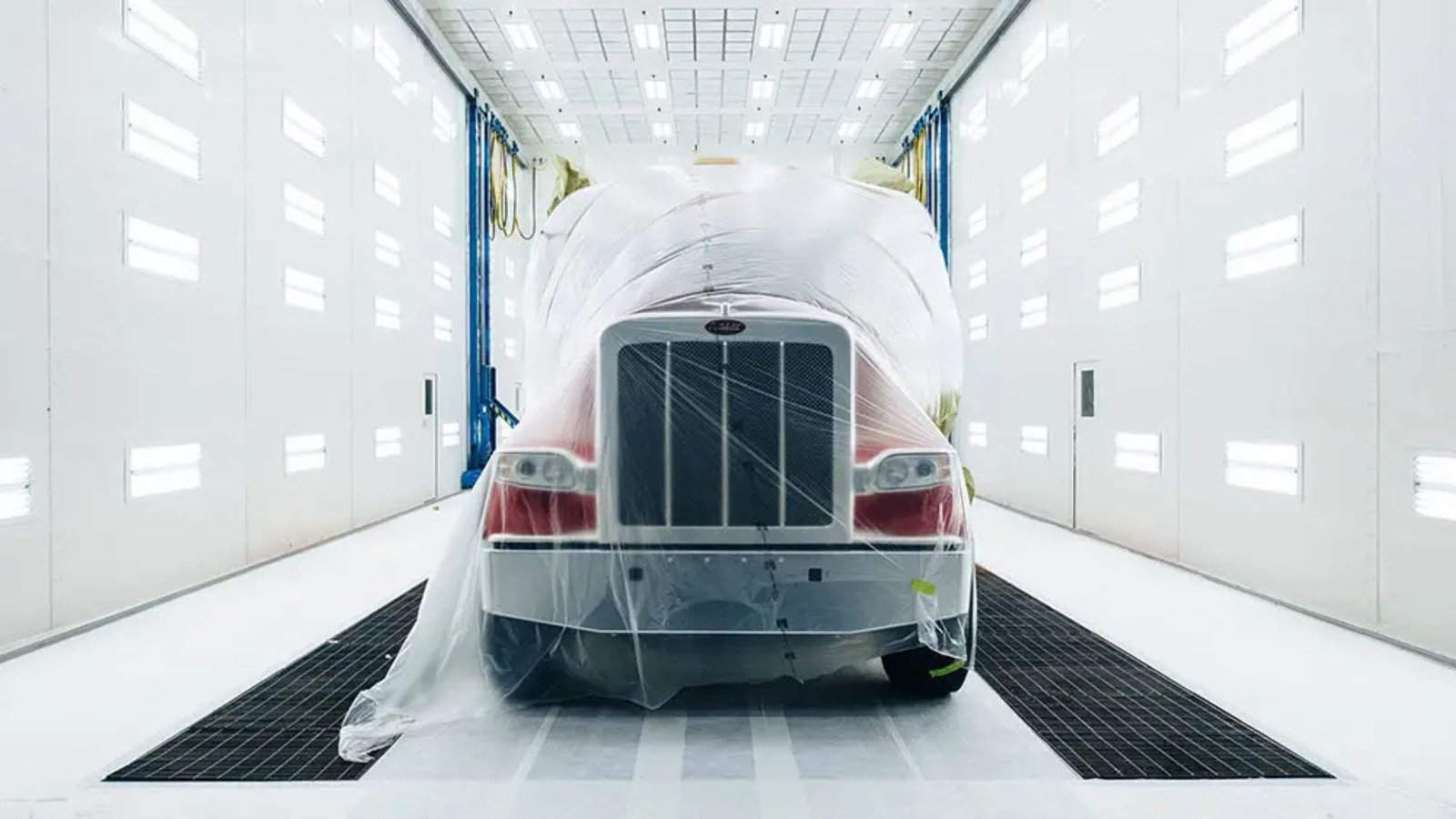
The paint booth is the part of the operation that directly produces your finish. It doesn't need to be new, but it needs to be maintained and controlled.
- Filters look recently replaced (visible contamination on the intake side is normal; contamination on the exit side is not)
- Floor and walls are clean enough that stray dust won't land on freshly sprayed panels
- Lighting is even and strong enough to inspect finish quality in the booth itself
- Temperature and airflow can be controlled — this matters for cure times and finish consistency
- Equipment is set up for the class of work they claim (commercial booths are larger, deeper, and differently ventilated than retail booths)
The records
This is the part most operators skip, and it's the most revealing. Ask to see the records from a recent job — not a specific customer's, just an example of what documentation looks like.
- Batch records for color and coating systems
- Inspection sign-offs at each major production stage
- Color draw-downs or reference samples on file
- Before-and-after documentation for individual units
- Any formal quality checklists the shop uses internally
A shop that can produce these immediately has a process it uses every day. A shop that has to dig for them has a process it claims to use. The difference matters.
Questions that separate serious shops
The questions worth asking during the visit aren't about capabilities in the abstract. They're about how the shop handles specific situations you'll eventually encounter.
- How do you archive custom fleet colors so refinish work three years from now matches the original?
- Walk me through your preparation process. What does the sign-off between prep and paint look like?
- If a unit arrives and you find damage outside the original scope, how does the conversation happen?
- What does your inspection checklist look like at final handover?
- How do you schedule multi-unit programs around fleet availability?
- What coating system would you recommend for the operating environment my fleet works in, and why?
Good answers to these questions sound specific and practiced. Bad answers sound improvised. You don't need to know the right answer to judge the quality of the response — you just need to notice whether the person giving it has clearly been through the situation before.
Red flags worth paying attention to
The conversation about your actual project
Once you're past the general evaluation, the most useful conversation is about your specific project. A serious shop will want to understand three things before giving you meaningful numbers: the vehicles themselves, the operating environment they live in, and the outcome you're actually trying to produce.
The outcome matters more than most operators realize. "Repaint the fleet" is not an outcome. "Maintain consistent fleet presentation across a 7-year operating cycle with scheduled refresh windows" is an outcome. Shops that engage with outcomes like the second one tend to produce work that matches. Shops that only engage with the first version tend to produce work that's fine the day it leaves and tired two years later.
The contract stage
Once you've selected a shop, the written agreement matters. This isn't about legal protection so much as about making sure both sides are working from the same understanding of the job.
- Clear scope definition — which vehicles, which work, which coating systems
- Documented color specification or draw-down approval process
- Staged production schedule with milestone dates
- Quality standard and inspection checkpoints, in writing
- Process for handling scope changes or unexpected conditions
- Documentation deliverables at handover
- Warranty terms on the finish itself
A serious commercial shop will welcome this level of specificity because it protects them as much as it protects you. A shop that resists documenting the work in detail is telling you something about how they'd rather operate.
A simple decision rule
When you're stuck choosing between shops, the rule that works most consistently is this: pick the shop that took your project seriously before they knew they had it. Shops that engage with the specifics before the commitment are shops that will engage with the specifics after. Shops that won't do the pre-work rarely start doing it once the contract is signed.
Commercial refinishing is a long relationship, not a one-time transaction. The upfront evaluation is where you decide whether you want to be in that relationship with the shop in front of you. Spend the time on it. The downstream savings are almost always larger than the evaluation cost.
Have a refinishing project that could use this thinking?
We work with commercial operators across Toronto and the GTA. Tell us what you're running and we'll walk through it with you.